

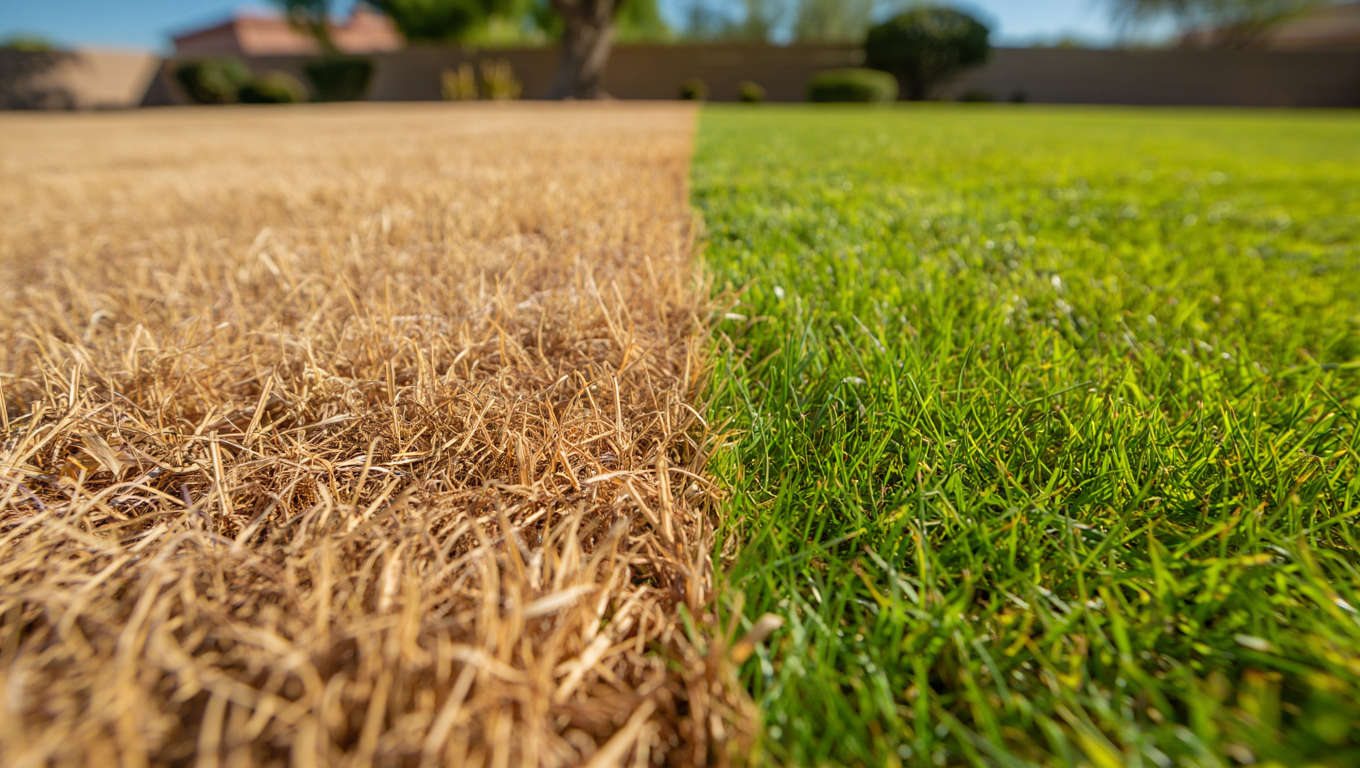
There is nothing more frustrating than stepping outside, expecting to see a healthy, green lawn, and instead noticing uneven brown patches scattered across your yard. One day everything looks great, and the next, it feels like your lawn is sending you distress signals. If you have found yourself wondering what went wrong, you are not alone.
Brown patches are one of the most common lawn issues homeowners face, and the causes are not always obvious at first glance. The truth is, your lawn is constantly responding to its environment, and those brown spots are usually a sign that something is out of balance. The good news is that once you understand what is causing the problem, it becomes much easier to correct it and bring your lawn back to life.
As a team that works with lawns every day, we have seen just about every scenario. Let’s break down the most common reasons your lawn may be developing brown patches and, more importantly, how to fix brown patches in lawn areas before they spread.
Understanding What Brown Patches Are Telling You
Before jumping into solutions, it helps to understand that brown patches are not the problem themselves. They are symptoms. Your lawn is essentially communicating that something is off, whether it is related to water, soil, pests, or overall care.
Brown patches can vary in size, shape, and severity. Some appear as small spots, while others can take over large sections of your yard. The key is identifying patterns and changes over time.
Ask yourself:
- Did the patches appear suddenly or gradually?
- Are they spreading or staying contained?
- Do they show up after watering, mowing, or weather changes?
These clues can help narrow down the cause and guide you toward the right solution.
Overwatering or Underwatering
Watering issues are one of the most common causes of brown patches, and interestingly, both too much and too little water can create similar-looking problems.
Signs of Underwatering
When your lawn is not getting enough water, the grass begins to dry out and lose its color.
Look for:
- Dry, brittle grass blades
- Soil that feels hard and compact
- Footprints that remain visible after walking
Signs of Overwatering
Too much water can be just as harmful. Overwatering suffocates roots and creates conditions for disease.
Common indicators include:
- Soft, soggy soil
- Yellowing grass before turning brown
- Fungal growth or a musty smell
Finding the Balance
A healthy lawn typically needs about 1 to 1.5 inches of water per week. Watering deeply and less frequently encourages strong root growth and helps prevent both extremes.
Lawn Diseases and Fungal Issues
If your brown patches seem to spread quickly or have irregular shapes, disease may be the culprit. Fungal infections thrive in warm, moist conditions, making them especially common during certain times of the year.
Common Lawn Diseases
Some of the most frequent issues we see include:
- Brown patch disease
- Dollar spot
- Summer patch
These diseases often appear as circular or irregular brown areas and can worsen if not addressed promptly.
How to Prevent and Treat
- Avoid overwatering and improve drainage
- Water early in the morning to reduce moisture buildup
- Keep your lawn properly mowed and maintained
In more severe cases, professional treatment may be needed to stop the spread and restore lawn health.
Soil Compaction and Poor Drainage
Healthy grass depends on healthy soil. When soil becomes compacted, it restricts airflow, water absorption, and root growth.
Signs of Compacted Soil
- Water pooling on the surface
- Grass struggling to grow in certain areas
- Hard, dense soil when touched
Compaction is common in high-traffic areas where the ground is repeatedly pressed down.
How to Improve Soil Conditions
Aeration is one of the most effective solutions. By creating small openings in the soil, aeration allows air, water, and nutrients to reach the roots more effectively.
This simple step can make a noticeable difference in how your lawn looks and performs.
Pest and Insect Damage
Sometimes, the issue is not environmental at all. It is biological. Certain pests feed on grass roots, weakening the lawn from below the surface.
Common Lawn Pests
- Grubs
- Chinch bugs
- Sod webworms
These pests can cause brown patches that appear suddenly and spread quickly.
How to Spot Pest Damage
- Grass that lifts easily from the soil
- Increased bird activity in affected areas
- Irregular patch patterns
If pests are the cause, targeted treatments can help eliminate the problem and prevent further damage.
Pet Damage
If you have pets, particularly dogs, they may be contributing to those brown spots.
Why It Happens
Pet urine contains high levels of nitrogen, which can burn grass and create concentrated brown patches.
What to Look For
- Small, circular brown spots
- Dark green rings surrounding the affected area
How to Address It
- Rinse affected areas with water to dilute urine
- Train pets to use designated areas
- Consider lawn treatments designed to neutralize damage
Improper Mowing Practices
Mowing may seem straightforward, but how you cut your lawn can have a significant impact on its health.
Common Mowing Mistakes
- Cutting grass too short
- Using dull mower blades
- Mowing too frequently or inconsistently
Why It Matters
Cutting grass too short weakens the plant and exposes the soil to more heat, leading to stress and discoloration.
Best Practices
- Keep your mower blades sharp
- Avoid removing more than one-third of the grass height at a time
- Adjust mowing frequency based on growth conditions
Nutrient Deficiencies
Grass needs the right balance of nutrients to stay healthy and green. When essential nutrients are lacking, brown patches can develop.
Signs of Nutrient Issues
- Uneven color across the lawn
- Slow growth
- Weak or thinning grass
How to Correct It
Applying the right fertilizer at the right time can restore balance and improve overall lawn health. Soil testing can also help identify specific deficiencies.
How to Fix Brown Patches in Lawn Areas
Once you have identified the cause, you can begin taking steps to repair the damage.
Step-by-Step Approach
- Adjust your watering schedule to ensure proper moisture levels
- Aerate compacted soil to improve airflow and absorption
- Treat any pest or disease issues promptly
- Reseed or patch damaged areas as needed
- Apply appropriate fertilizers to support recovery
Consistency is key. While some improvements can happen quickly, full recovery may take time depending on the severity of the issue.
Preventing Future Lawn Problems
Once your lawn is back on track, maintaining it becomes much easier. Preventative care goes a long way in avoiding recurring issues.
Focus on:
- Regular inspections to catch early signs of trouble
- Proper watering habits
- Seasonal lawn care adjustments
- Routine maintenance such as mowing and aeration
A proactive approach helps keep your lawn healthy year-round.
Frequently Asked Questions About Brown Patches in Lawns
Why does my lawn have brown patches even though I water it regularly?
Regular watering does not always mean your lawn is getting the right amount of moisture. Brown patches can still develop if the lawn is being overwatered, underwatered, or watered too often without allowing the soil to dry properly. Poor drainage, compacted soil, fungal issues, and pests can also cause brown areas even when watering seems consistent.
Can brown patches in grass turn green again?
In many cases, yes. If the grass is only stressed and not fully dead, correcting the underlying issue can help it recover and regain its color. Adjusting watering habits, improving soil conditions, treating pests or disease, and applying the right nutrients can all help restore a healthier lawn. If the grass is completely dead, reseeding or patch repair may be necessary.
How do I know if brown patches are caused by fungus or lack of water?
Brown patches caused by drought stress usually come with dry, brittle grass and hard soil. Fungal issues are more likely when the soil stays damp, the patches spread quickly, or you notice irregular shapes, discoloration, or signs of mold-like growth. If the lawn feels soggy or has a musty smell, fungus may be more likely than drought stress.
Will dog urine cause brown patches in my lawn?
Yes, pet urine is a common reason for small brown spots in grass. The high nitrogen content can burn the lawn and create circular patches, often with a darker green ring around the outside. Rinsing the area quickly with water and training pets to use a designated section of the yard can help reduce damage.
What is the fastest way to fix brown patches in lawn areas?
The fastest way to fix brown patches in lawn areas is to identify the actual cause first. Once you know whether the issue is related to watering, pests, disease, mowing, or nutrients, you can take the right corrective steps. In many cases, this includes adjusting irrigation, aerating the soil, treating lawn problems promptly, and reseeding damaged areas if needed.
Should I rake out brown patches before reseeding?
Yes, it is usually a good idea to remove dead grass and loosen the top layer of soil before reseeding. This helps the new seed make better contact with the soil and improves the chances of successful growth. If the area is heavily compacted, aeration or light soil preparation may also help.
How can I prevent brown patches from coming back?
Prevention starts with consistent lawn care. Water deeply but not too often, mow at the proper height, keep mower blades sharp, inspect for pests and disease, and aerate compacted areas when needed. Regular maintenance and early action can stop small problems from turning into widespread lawn damage.
When should I call a professional for brown patches in my lawn?
If brown patches keep spreading, do not improve after basic care changes, or seem tied to disease, pests, or deeper soil issues, it is smart to call a professional. An experienced lawn care team can diagnose the cause more accurately and recommend a treatment plan that saves time and prevents further damage.
Let’s Get Your Lawn Looking Its Best Again
Brown patches can feel frustrating, but they are not permanent. With the right approach and a little expert guidance, your lawn can recover and come back stronger than before. The key is understanding what your lawn needs and addressing issues early before they have a chance to spread.
At Sergio’s Lawn Services, we specialize in diagnosing and treating lawn issues just like this. Our team has hands-on experience working with a wide range of lawn conditions, and we know exactly what it takes to restore healthy, vibrant grass. Whether you are dealing with watering issues, pests, soil problems, or anything in between, we take a tailored approach to ensure your lawn gets the care it needs.
If you are ready to stop guessing and start seeing real results, we are here to help. Visit https://sergiolawnservices.com/ to learn more about our services, schedule an evaluation, and connect with a team that is committed to bringing your lawn back to life. Let’s turn those brown patches into the lush, green yard you have been working toward.